Login
Login
submitted by /u/mherchel
[link] [comments]


 | The release includes a single page order management interface, making it easier for merchants to find and update any aspect of an order. [link] [comments] |
We’re a senior US-based product team building clean, scalable platforms for US and Canadian clients. We’re looking for a hybrid full-stack developer who can own features end-to-end — frontend to backend — and help us ship products the right way.
Our Vision
We’re building a tight, high-output team that creates modern, reliable software without bloated processes or corporate noise. The goal is simple: ship clean architecture, scalable systems, and products that clients can actually grow on. We move fast, think long-term, and care about quality.
What You’ll Bring
- Strong communication and independent execution
- Experience with React / Next.js
- Backend experience with Node.js or Django
- Solid understanding of APIs, databases, and scalable systems
- Ability to align with US time zones
If you want to build serious products with serious people, let’s talk.
When a content type has revisioning enabled, edits performed through the Drupal UI correctly create new revisions. However, updates made via the REST API (PATCH/PUT) modify the current revision in place and do not automatically create a new revision, unless explicitly programmed.
This behavior contradicts the intuitive and UI-based expectation that every content modification on a revision-enabled entity results in a new revision, regardless of the update channel.
What do you think, wouldn't the expected behaviour be to create a new revision for revision enabled content on Rest API PATCH request?
Mar 6, 15:55 UTC
Completed - This scheduled maintenance is now complete across all regions. Thank you for your patience and understanding throughout this process.
Mar 6, 11:00 UTC
In progress - Scheduled maintenance is currently in progress. We will provide updates as necessary.
Mar 5, 13:05 UTC
Scheduled - Phase 2 maintenance is complete. Phase 3 is scheduled to begin at March 06, 11:00 UTC.
Mar 5, 10:00 UTC
In progress - Scheduled maintenance is currently in progress. We will provide updates as necessary.
Mar 3, 13:03 UTC
Scheduled - Phase 1 maintenance is complete. Phase 2 is scheduled to begin at March 05, 10:00 UTC.
Mar 3, 10:00 UTC
In progress - Scheduled maintenance is currently in progress. We will provide updates as necessary.
Mar 1, 10:44 UTC
Scheduled - Start: 2026-03-03 10:00 UTC
End: 2026-03-06 13:00 UTC
Hello,
During the above window, our Engineering team will be performing maintenance on core control plane infrastructure in all regions. Please note that the existing infrastructure will continue running without issue.This maintenance will be carried out in three phases as outlined below:
March 03, 10:00 to 13:00 UTC
March 05, 10:00 to 13:00 UTC
March 06, 11:00 to 13:00 UTC
We do not anticipate any impact; however, there is a small possibility that control panel functionality specifically CRUD (Create, Read, Update, Delete) operations may be affected during the maintenance window. All running workloads are expected to continue operating normally without interruption.
Our team will be actively monitoring the environment throughout the maintenance, and any unexpected events will be promptly communicated through our status page.
If you have any questions or concerns regarding this maintenance, please feel free to open a support ticket from within your account. We’re here to help.
Hey folks, I’m a web dev and I built a tiny tool for collecting website feedback directly on the page (click somewhere → leave a comment pinned to that spot).
I’m posting because I’m too close to it and I need honest outside feedback. I’m not trying to market anything — I’m specifically looking for people who’ll try it for 5–10 minutes and tell me what sucks / what’s unclear / what would stop you from using it on a real project.
What I’m hoping to learn:
If you’re willing, comment “I’ll test” and I’ll DM you a link (or DM me).
And if this kind of post isn’t allowed here, tell me and I’ll remove it right away.
Mar 2, 16:00 UTC
Completed - The scheduled maintenance has been completed.
Mar 2, 13:00 UTC
In progress - Scheduled maintenance is currently in progress. We will provide updates as necessary.
Feb 28, 13:20 UTC
Scheduled - Start: 2026-03-02 13:00 UTC
End: 2026-03-02 16:00 UTC
During the above window, our Engineering team will be performing maintenance on core control plane infrastructure in SFO2 and SFO3. Please note that the existing infrastructure will continue running without issue.
We do not anticipate any impact; however, there is a small possibility that control panel functionality specifically CRUD (Create, Read, Update, Delete) operations may be affected during the maintenance window. All running workloads are expected to continue operating normally without interruption.
Our team will be actively monitoring the environment throughout the maintenance, and any unexpected events will be promptly communicated through our status page.
If you have any questions or concerns regarding this maintenance, please feel free to open a support ticket from within your account. We’re here to help.
Upgrading to Drupal 2.0 helps organizations modernize their websites with improved performance, stronger security, and better scalability. Older Drupal versions often face compatibility and maintenance challenges, making upgrades necessary for long-term digital growth.
Drupal 2.0 introduces a more flexible architecture, faster loading speeds, and improved integration capabilities with modern applications and cloud environments. It also enhances the content editing experience, allowing teams to manage websites more efficiently.
Upgrading to Drupal 2.0 ensures your digital platform remains secure, efficient, and capable of supporting evolving business needs.
Feb 26, 22:23 UTC
Resolved - Issue resolved.
Cause: A few requests made to the Llama 3.3-70B model caused issues.
Impact: Intermittent errors when interacting with the model through serverless inference and/or with agents created using this model.
Contact support if issues persist.
Feb 26, 21:52 UTC
Monitoring - Fix deployed. Monitoring resources related to the Llama 3.3-70B.
Users should no longer experience intermittent errors when making serverless inference requests via APIs and Agents . Awaiting confirmation before closure.
Feb 26, 16:00 UTC
Investigating - We are currently investigating an issue affecting the Llama 3.3-70B model.
Symptoms: Users may encounter intermittent errors when making serverless inference requests via APIs and Agents.
Current Status: Our engineering team is actively investigating the issue to determine the root cause.
Feb 27, 04:55 UTC
Resolved - Our Engineering team has confirmed that the issue impacting build failures on App Platform has been resolved. Between approximately 14:30 UTC on the 26th and 00:01 UTC on the 27th, users may have experienced errors when attempting to build or deploy applications using older versions of the Node.js buildpack. A fix has been implemented, and build and deployment operations have been restored to normal.
All App Platform builds are now succeeding as expected. Customers who previously encountered build failures should now be able to deploy their applications without further issues.
If you continue to experience any problems, please open a ticket with our support team. Thank you for your patience, and we apologize for any inconvenience.
Feb 26, 17:14 UTC
Investigating - As of 14:30 UTC, our Engineering team is investigating reports of build failures on App Platform for customers using older version of the Node.js buildpack. Users may experience errors when attempting to build their applications, resulting in failed deployments.
Our Engineering team is working to fix the issue and will share an update once we have more information. In the meantime, as a workaround, we recommend that customers upgrade to the latest version of Node.js build packs. This may help to resolve the build failures and allow for successful deployments. To upgrade, please follow the instructions outlined here:
https://docs.digitalocean.com/products/app-platform/how-to/migrate-nodejs-buildpack/
We apologize for the inconvenience this issue may be causing and appreciate your patience as we work to resolve it.
Hi folks,
I’m currently exploring Drupal CMS 2.0 and would like to understand how it compares with the standard Drupal setup.
If you’ve worked with CMS 2.0, could you please share:
I’m trying to evaluate whether CMS 2.0 is suitable for long-term projects, so your real-world experiences and suggestions would be really helpful.
Thanks in advance—looking forward to your thoughts!
I've been away from Drupal too long, sucked into WordPress. My company has an ongoing problem with the org chart - specifically it's advertising. I think I can use Drupal to manage this, but I have a lot of rust and haven't worked intensely with it in years (when 8 was current).
The Database I've sketched out uses a UUID approach to coordinate it's contents with outside databases it must stay in sync with, including the aforementioned WordPress site which I will be getting post information from. I'm trying to keep fields on only one table if feasible.
I'm going to go over some of the structure I designed without considering Drupal as the administrating program, so I am open to letting this change as long as I can get the same end result. Note also that this design is informed by schema.org entries for Medical Organizations - of which my company is one (and a fairly large one)
Everything is an Entity. This is the only table with an autoincrement field. Any entry created on any other table starts with an entity entry. For example, if I'm adding a provider the Entity table holds the mappings to the other databases, the entry name and a schema.org description, the person table contains information about the provider's name (given name, surname, which comes first since we have providers with Asian names, gender, etc), and the provider table contains information on whether they accepting new patients, the URL to their scheduler, their NPI (think social security number for medical professionals).
The provider table also cross-references with locations with additional information about which days the provider is at that location and which one is their primary. Another cross reference is which hospitals they have admission privileges to, and another maps which organizations they belong to. Yet another details their education, and their certifications, and the insurances they accept.
The UUID comes into play because hospitals also have insurance company contracts. So that table needs to be joinable with providers or hospitals.
So when I have an edit view of a provider I want the form to present this information cleanly without the user needing to go through multiple forms
I think Drupal can do this out of the box. If not out of the box I have written modules before, but in that event why use Drupal instead of just standing this up in Laravel or Symfony? I'm looking something that is resilient, but I don't want to spend more than a month on this if I can help it.
Hello,
Working a new Drupal site 11 site. And did some testing. When I embed more than 20 images from the media library in CKEditor field (full html).
All the embedded images are shown in CK editor.
But when I switch to the frontend only the fist 20 images are shown are shown. The other content (text) shows correct but images (after number 20) are stripped from the page (also from the html).
Switched the theme to Olivero (to test if this was theme related) but th same problem occurred. Played somewhat with the CKeditor setting (disabled/enabled html corrections).
Checked the logs (php/mysql/apache / console) but saw no error messages.
Any ideas/suggestions what can cause this?
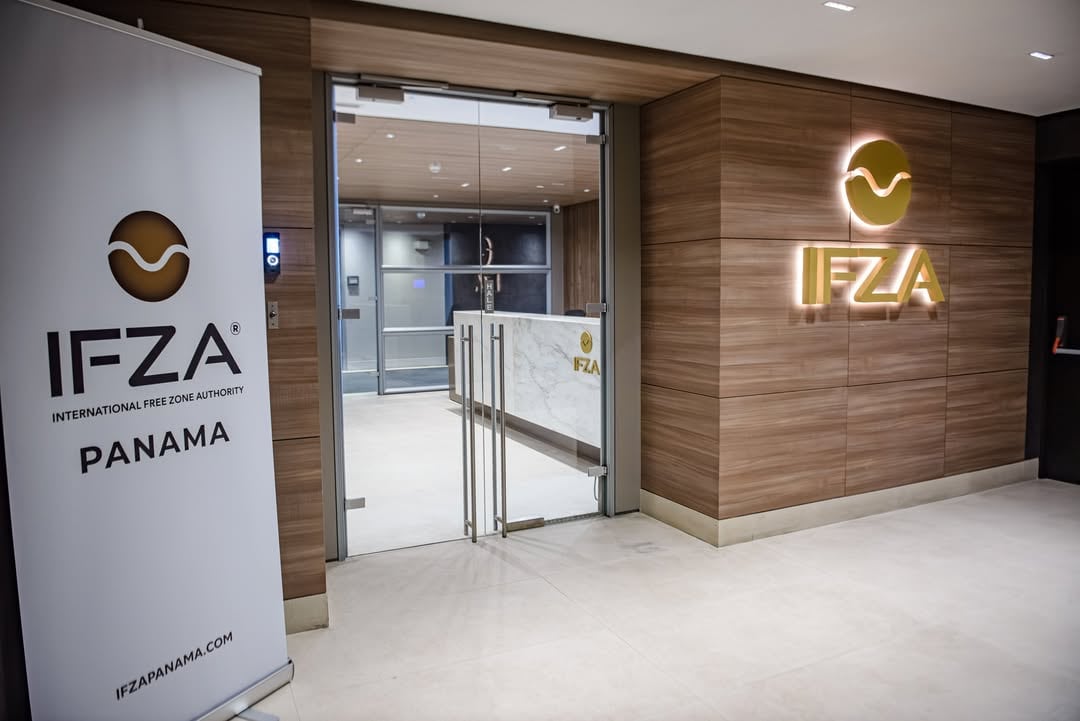
Panamá suma un nuevo actor a su ecosistema empresarial con la llegada de IFZA (International Free Zone Authority), una zona franca que propone un modelo distinto al tradicional y que busca posicionar al país como hub regional de servicios modernos, tecnología y emprendimiento.
En entrevista, Markus Raiser, gerente general de IFZA Panamá, explicó que la propuesta rompe con el esquema clásico de zonas francas centradas en logística, manufactura o grandes multinacionales.
“Normalmente la zona franca se enfoca en logística o producción. Nosotros tenemos un enfoque claro en empresas de servicios”, afirmó.
El corazón del modelo de IFZA está en atraer compañías de servicios profesionales, marketing, redes sociales, tecnología, fintech, criptoactivos y empresas comerciales que busquen establecer oficinas de ventas para Latinoamérica y Norteamérica.
El diferenciador más marcado es su apuesta por startups y pequeñas y medianas empresas. “Nos enfocamos también en pymes y emprendedores que no cuentan con grandes departamentos dedicados a la internacionalización. Queremos ser su socio en ese proceso”, señaló Raiser.
Dicho enfoque, agregó, se alinea con la estrategia nacional para impulsar la exportación de servicios modernos y generar empleos de mayor especialización.
IFZA no solo ofrece los incentivos propios del régimen de una zona franca, sino un acompañamiento integral durante todo el proceso de instalación en Panamá.
La entidad apoya en la constitución de la empresa y el Registro Único de Contribuyentes (RUC), la tramitación ante el Ministerio de Comercio e Industrias (MICI), la gestión de residencias para dueños o directivos, así como en soluciones de oficinas virtuales, coworking y espacios personalizados. También brinda acceso a salas de reuniones, videoconferencias, recepción, servicios administrativos y conexión con bancos y asesores legales, fiscales y laborales.
“Nuestro concepto es que el cliente se concentre en su negocio. Nosotros asumimos la carga administrativa”, explicó Raiser. Además, promueve un ecosistema que incluye servicios de contabilidad, estudios de mercados y, en cooperación con firmas legales y proveedores de servicios corporativos locales, dando soporte en temas legales, fiscales y laborales.
Asimismo, IFZA está absolutamente abierta en trabajar con todos los expertos existentes como abogados, asesores fiscales y financieros que ya hoy en día apoyan a clientes para instalarse en Panamá.
Uno de los pilares del modelo es la digitalización de los procesos. A través de su portal electrónico, el cliente puede completar el establecimiento de su empresa de forma online, con trazabilidad clara de documentos y requisitos.
Según Raiser, esta innovación permitió en Dubái —donde IFZA desarrolló parte de su experiencia— constituir empresas en pocos días, gracias a la conexión electrónica con entidades gubernamentales y la eliminación de trámites físicos.
El objetivo en Panamá es impulsar mayor agilidad y modernización en coordinación con las autoridades locales. A corto y mediano plazo, IFZA proyecta atraer inversionistas que utilicen Panamá como plataforma para operar en América del Norte y del Sur.
El impacto, según Raiser, no sería únicamente directo —con nuevas empresas y empleos de alta gama— sino también indirecto e inducido en sectores como vivienda, servicios, restaurantes, transporte y asesorías profesionales. “La experiencia internacional demuestra que un hub de servicios modernos dinamiza toda la economía”, indicó.
De acuerdo con el gerente general, IFZA evaluó distintos países antes de elegir Panamá como punto de expansión. Entre los factores determinantes mencionó la posición geográfica estratégica, la conectividad y tradición logística, la estabilidad regional, el uso del dólar, el marco legal de zonas francas con incentivos fiscales y la calidad de vida.
No obstante, reconoció que uno de los principales retos es mejorar el conocimiento internacional sobre las ventajas reales del país. “Panamá tiene muchísimo potencial, pero muchas empresas no lo saben. Queremos ayudar a contar esa historia”, afirmó.
IFZA busca posicionarse como el aliado de los ejecutivos que planean expandir sus empresas en la región.
Con un modelo centrado en servicios modernos, procesos digitales y acompañamiento integral, IFZA Panamá aspira a impulsar una nueva generación de zonas francas más ágiles y adaptadas a la economía global.