❌

Reading view

Texas City Demands $2 Million For Public Records On Flock Usage

An anonymous reader quotes a report from Ars Technica: As bipartisan backlash against Flock grows, some cities are asking anti-surveillance advocates and media outlets to pay eye-popping fees -- including charging tens of thousands or even millions -- to get information about how police departments are using and potentially abusing AI-enabled camera systems that track every vehicle that passes them. On Monday, the Texas Tribune reported that city officials in a Fort Worth suburb, North Richland Hills, asked one group to pay $2.3 million before it would fulfill a public records request for Flock data. To reach that high fee, officials claimed that searching "about a terabyte worth of communications about errors, misuse, and effectiveness of the Flock system" would take approximately 14 years of labor at a rate of $15 per hour. Phil Mynona, who filed the request using a pseudonym on behalf of his group, the Texas Privacy Coalition, told the Tribune that the fee seemed "ludicrous" and designed to stifle his public records searches. Mynona has sought similar records from more than 200 law enforcement agencies across the US, and he said it was impossible to predict how cities assessed fees for Flock records. Some cities provided more than 400,000 pages of documents for free, while others charged $5,000. Other groups, including a Houston news station called KPRC, have seen officials quote up to $121,000 for Flock records, the Tribune reported. The high price tags may be hiding data that anti-surveillance groups note have triggered audits, arrests, and changes in how law enforcement uses cameras, including decisions to get rid of cameras. Further reading: Flock Blamed for Wrongful 13-Day Imprisonment and a Police Stalking Incident in Florida

Read more of this story at Slashdot.
  •  

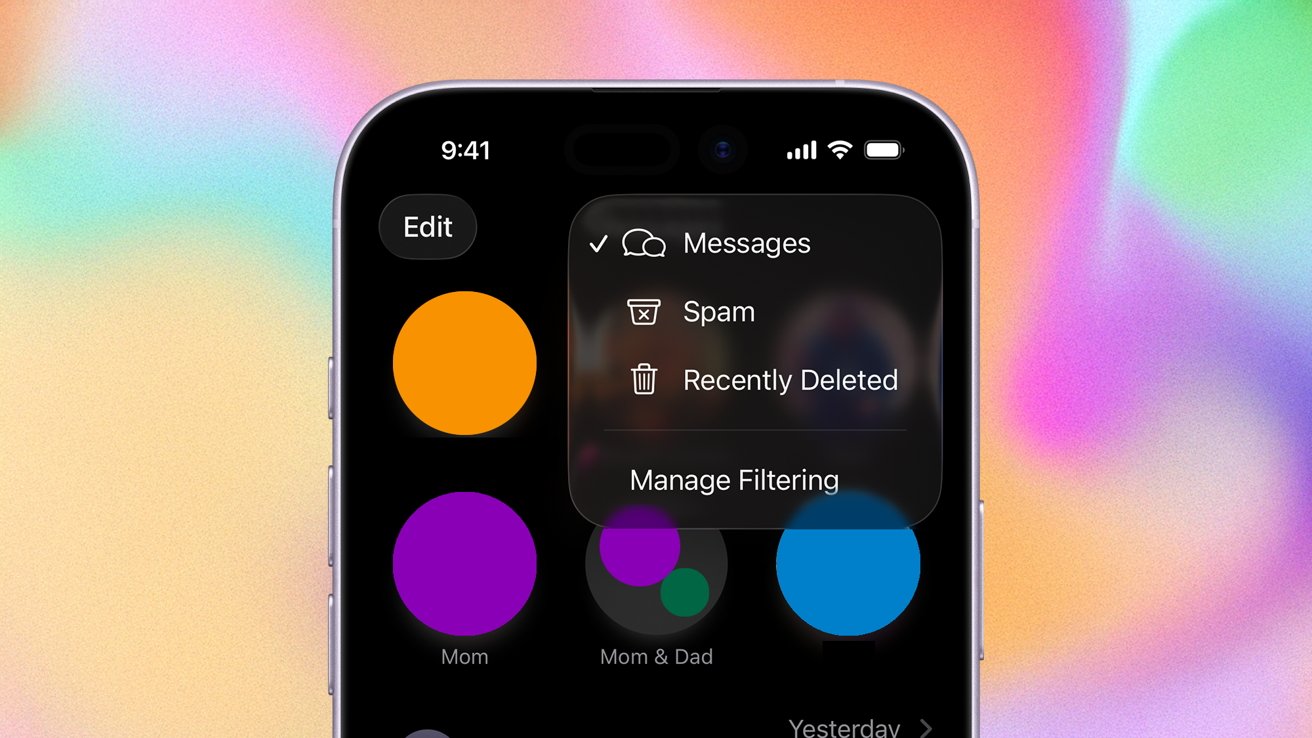
How to use filtering in Messages on iOS 27

If your Messages inbox is catching a lot of stray, unwanted messages, we'll show you how to filter, report, and block spam messages on iOS 27.

Close-up of an iPhone Messages screen showing a dropdown menu with options: Messages, Spam, Recently Deleted, and Manage Filtering, over colorful circular contact icons and a blurred pastel background
Learn how to filter, report, and block messages on iPhone

At WWDC 2025, Apple announced that it would be bringing enhanced message filtering capabilities to Messages. As promised, they rolled out as part of iOS 26, released in September 2025. They continue to be available in iOS 27.

The new features are designed to help manage the onslaught of texts everyone seems to get these days. Here's how to do it.


Continue Reading on AppleInsider | Discuss on our Forums
  •  

Second October 'event' possible with new Macs as the focus

Apple already has an unannounced product reveal expected on October 13 and rumors suggest a second round of releases could occur by the end of the month.

Partially closed silver MacBook Pro viewed from above, showing black keyboard keys, speaker grill, and slim edge against a plain white surface
New MacBook Pro models are expected soon

It is gearing up to be a very busy October for Apple, as iPhone Duo ships, Apple Home gets several new products, and now a possible new Mac launch. Earlier rumors placed Macs in November, but it seems the "Scary Fast" event could see a repeat in 2026.

According to anonymous sources speaking to MacRumors, a second product launch is expected at the end of October. That's the whole rumor, what follows is speculation.


Rumor Score: 🤔 Possible


Continue Reading on AppleInsider | Discuss on our Forums
  •  

How do I design in Wordpress ???

Okay so i just installed wordpress and since i learned on figma and framer (as a designer not a developper), i wanted to play around and just make my little website like i usually do it BUT, it turns out i am very limited on designing anything, I cant change the color palet, the styles (like wtf) on a free plan of a open source software.

I just want to try to understand wordpress design by my own, look for things, find them, make them look good. I dont want to pay for a host or anything either i dont give a shit about publishing my work, i just want to learn how to use it. I also heard about elementor but is there a free alternative

Is there an easy, simple and free way to do that or am i forced to pay at one point.

(I apologise if this question seems stupid or what but first its late and i just can't figure it out man i just want a simple answer)

submitted by /u/Flagadou
[link] [comments]
  •  

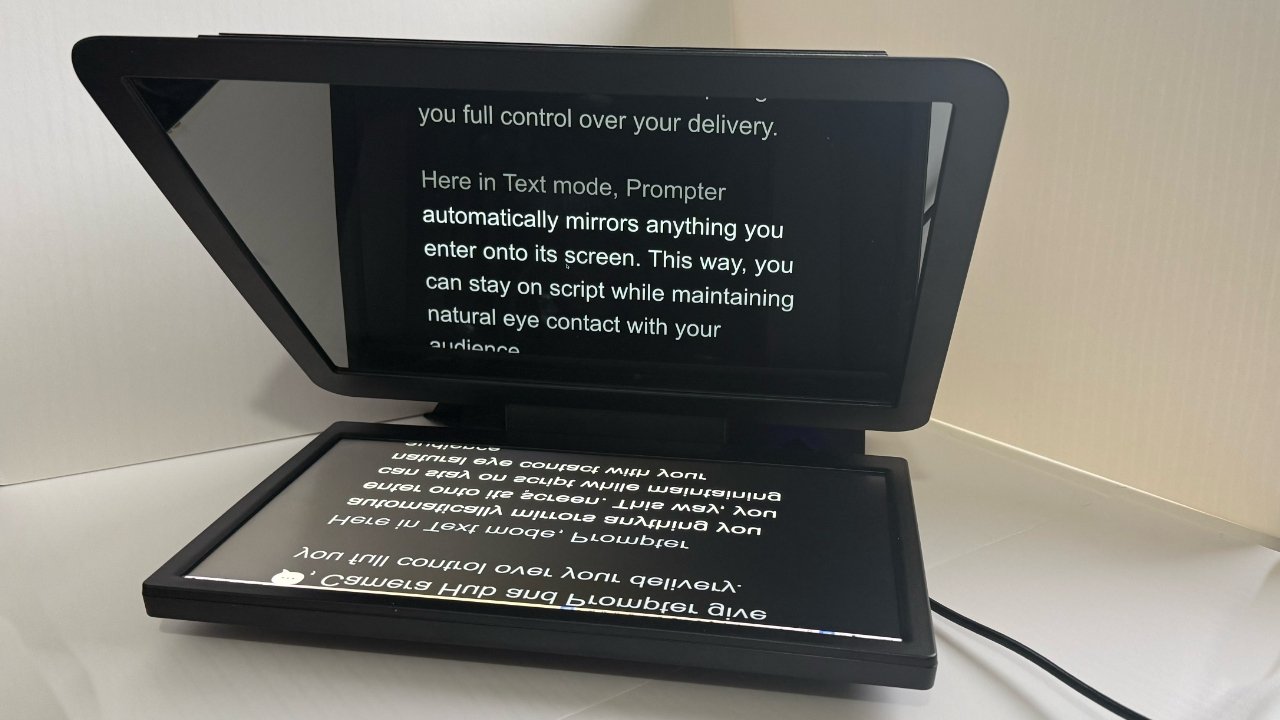
Elgato Prompter XL review -- simply the teleprompter for Apple users to buy

The Elgato Prompter XL teleprompter builds on the excellent original and brings a larger screen, plus refinements to everything else in hardware, but the software still needs a little work.

Desktop teleprompter device with a slanted reflective screen showing mirrored white text on black background, mounted above a flat display screen, sitting on a white tabletop.
Elgato Prompter XL has a great display, great hardware, but its software lets it down

This should be a 5-star review. Not every product is for everyone, and not every price point is for every budget, but for those for whom this is aimed, this ought to be a 5-star review.

And it would be if this were solely about the hardware, but while that is exceptional, Elgato's software is still a little problematic. It only pulls the review down to 4 stars, but it does pull it down.


Continue Reading on AppleInsider | Discuss on our Forums
  •  

Ghl was soooo overwhelming

I logged in, saw all the tabs and options, and had no idea where to start.

I knew how the platform was supposed to work. Email, text, funnels, payments, automations, all in one place. But getting all of it to work together felt like a ginormous undertaking.

I watched hours of YouTube tutorials and did a lot of trial and error. About 9 months later, I finally had a well oiled machine doing everything it should.

That was 5 years ago. Now I help others get through that learning curve much faster.

Let me know where you're at with GHL and if you need help. I can get you 30 days GHL free if you're a new subscriber and I'll help you get it set up for free!

submitted by /u/whatsausername611
[link] [comments]
  •  

What's the least painful way to connect an AI assistant to an AMS?

Say a member asks when their renewal is due, whether an event is included in their tier or what a policy actually means, part of that answer lives in the AMS, part of it lives in docs and some of it changes constantly.

That's the part I'm trying to figure out. Would you keep iMIS, Salesforce, HubSpot as the source of truth, use n8n or Make to pull the live account data, and let a tool like customgpt.ai handle the approved knowledge and content side? Or does that become too many moving parts? copilot studio also seems like it could make sense in a microsoft heavy organization, while a custom api and rag setup would obviously give more control.

I'm less interested in the "AI chatbot" part and more in how people are keeping permissions, live data and static knowledge from getting mixed together. Has anyone built this around an AMS or membership CRM? What architecture ended up being the least annoying?

submitted by /u/Emery-Cantrell
[link] [comments]
  •  

Is anyone here using Drupal Steward?

Every software platform eventually deals with serious vulnerabilities.

So when evaluating a platform's security, I don't think "Has this software ever had a serious vulnerability?" is a particularly useful question.

A better question is: What happens when one is found?

I started thinking about this after reading about the recent Citrix NetScaler zero-day. It also got me thinking about something Drupal has built specifically for that uncomfortable period between disclosure of a critical vulnerability and getting the actual patch deployed: Drupal Steward.

For certain highly critical, mass-exploitable vulnerabilities, Steward can provide network-level protection while organizations test and deploy the software update. It doesn't replace patching, but it can make that "patch gap" less dangerous.

I dug into Steward, Drupal's coordinated security process, and why I think the response to vulnerabilities tells us more about a platform's security than the existence of vulnerabilities themselves:

Zero-Days Happen. What Matters Is What Happens Next.

I'm especially curious: who here is actually using Drupal Steward? What's your experience been with it?

submitted by /u/tekNorah
[link] [comments]
  •  

Rural Data Centers Are in for a Big Federal Tax Break

Wired reports that rural data center projects could become eligible for expanded federal Opportunity Zone tax benefits starting in 2027, with more than 100 planned or developing facilities potentially qualifying. "Right now, the only requirement to get the benefits is capital investment," says Emily Kraschel, a tax policy analyst at the Searchlight Institute, a public policy think tank. "However, that doesn't guarantee that that money is necessarily creating jobs or creating a local economic boost. You'd be more sure of that with a more traditional factory that requires lots of workers. But with a data center, that assumption goes a little wonky." From the report: During the first Trump administration, a bipartisan group of lawmakers proposed the creation of the opportunity zone program, which offers tax benefits for companies that choose to build projects in certain low-income census tracts. Last year, the One Big Beautiful Bill Act made a number of changes to open up the program in order to attract more investment to rural areas. Kraschel and her colleagues from Searchlight have been researching data center projects that might qualify for these tax benefits, comparing the locations of data center projects in development with rural census tracts eligible for the new program. Wired exclusively reviewed the research compiled by Searchlight and found more than 100 data centers under various stages of development in rural areas that could be eligible. Searchlight used a very conservative database of under 700 data center projects that are planned or under construction to compile its research; other datasets put the number of data centers in development in the US at closer to 1,500. It's very likely that the number of newly eligible projects is bigger, especially since more data centers are decamping from urban areas. Separate research from Pew found that while just 13 percent of operating data centers are located in rural areas, a majority of planned facilities -- around 67 percent -- are going rural. [...] A project simply existing in a rural opportunity zone doesn't mean the company automatically will get the tax benefits; the company has to create a specialized investment vehicle to kickstart the process. Because the tax break can be considered confidential IRS data, it's next to impossible to know which companies are pursuing the benefits unless they voluntarily disclose. [...] Nathan Jensen, a government professor at the University of Texas-Austin, says that he would be "very surprised" if some companies were not considering siting in rural opportunity zones as part of their decisionmaking process. "It's essentially free money," he says. There is no requirement for projects getting opportunity zone benefits to create jobs; the assumption is that they will do so, simply by siting in the community itself. This isn't always the case for projects like storage facilities and warehouses, which, Jensen says, have been popular choices for developers working in opportunity zones. Data centers may create a number of jobs in the short term for their construction, but there's an ongoing debate about whether or not they create a lasting new workforce over the longer term.

Read more of this story at Slashdot.

  •  

Hackers Steal 8 Million Citizens' Records From Danish Government Database

Hackers stole records belonging to roughly 8 million Danish citizens and residents from Denmark's Central Person Register (CPR), including names, addresses, social security numbers and other personal information. The breach is believed to be the largest in Denmark's history. TechCrunch reports: The CPR is a government database of Danish citizens' information, including their government-issued identity number for paying taxes and accessing other services. Denmark's current population is about 6 million people, but the database includes records for about 11 million people, with some of the data going back decades. The Danish government would not say who is behind the breach, which happened in September but was discovered on October 2. However, it said the unauthorized access was obtained by "abusing a Danish company's lawful access to search for information in the CPR system." (Some companies in Denmark have access to the CPR for verifying people's information with the government.)

Read more of this story at Slashdot.
  •  

macOS development continues to hint at touchscreen MacBooks

Apple's latest macOS 27.2 beta references new touch gestures for Safari and Notes, meaning we're in for a neat Sidecar upgrade, a touchscreen MacBook Pro, or both.

Open laptop on a desk displaying a scenic wallpaper of a rocky shoreline with clear blue water and distant mountains, set against a softly lit indoor background
macOS 27.2 beta 3 includes new touchscreen gestures for system apps.

While rumors of a MacBook Pro with a touchscreen go back years, it looks as though the device is finally nearing release. Monday's macOS 27.2 beta indicates that multiple system applications will receive additional touch recognition capabilities.

As MacRumors points out, the Notes app supports a feature dubbed "ICTouchPressGestureRecognizer," while QuickLook gained a "dragTouch" capability. Safari, meanwhile, was updated with a "touch sentinel recognizer," though these capabilities are only referenced in the software code.


Continue Reading on AppleInsider | Discuss on our Forums
  •  

[PROMO] Need a bulk PNG to JPG & Optimizer?

https://wordpress.org/plugins/imgoptimizer-png-to-jpg/

ImgOptimizer & PNG to JPG helps you reduce Media Library image sizes without changing image attachment IDs.

  • Process JPEG and PNG images in batches.
  • Resize images that exceed configured dimensions.
  • Recompress JPEG images at a configurable quality.
  • Recompress PNG images while preserving transparency.
  • Convert PNGs to JPEG only when no transparency is detected.
  • Process a single image or selected Media Library images.
  • Optionally process new image uploads.
  • Roll back any processed image to its original file, individually or in bulk.

PNG-to-JPG conversion changes the image URL extension. Keep the original PNG until you have checked affected pages, especially when a page builder stores image URLs in custom data.

submitted by /u/juanloco_pocoyo
[link] [comments]
  •  

Siri AI & Smart Replies coming to Apple TV hardware

We now have yet another indication that Apple Intelligence is coming to the next Apple TV 4K, with references to Apple's foundation models surfacing in a tvOS 27.2 beta.

Space gray Apple Mac mini desktop computer on a white stand, Apple logo centered on the front, with a blurred potted plant and soft geometric background behind it
Siri AI & Smart Replies might be offered with the next-generation Apple TV 4K.

Back in June 2026, tvOS 27 code suggested that the next-generation Apple TV 4K would support Siri AI. Apple's own software has once again referenced the same upgrade, which is both inevitable and an obvious choice at this point.

On Monday, Apple released the third developer beta of tvOS 27.2. In the update, strings for the Settings app directly mention Apple's foundation models. "Help improve foundation models and Siri by allowing Apple to collect and use your text and audio interactions with Siri, Dictation, and Translate," says a description found in tvOS 27.2 beta 3.


Continue Reading on AppleInsider | Discuss on our Forums
  •  

Wikipedia Operator Says OpenAI's 'Rogue' Bots May Be Linked to a May Outage

The Wikimedia Foundation says it found evidence that "rogue" OpenAI agents edited Wikimedia wikis without approval, unsuccessfully tried to exploit its Etherpad service, and generated millions of automated requests across Wikimedia projects. Here's a summary of what Wikimedia observed (via The Verge): Wiki editing: We've identified edits to Wikimedia wikis that we believe are from AI agents operated by OpenAI. These edits were not published to pages with visibility to general readers; almost all of them were testing edits in "sandbox" areas of the wiki. It also included a few edits to the configuration for a citation tool, which we believe were potentially malicious edits that were intended to misuse this tool as a proxy for fetching data from remote services. While Wikipedia policies allow bots to edit when they are disclosed and approved by the community, none of those approvals were sought in these incidents. Etherpad probing and use: Agents we believe to be operated by OpenAI made some unsuccessful attempts to compromise our public Etherpad, a note-taking tool we host as a community service. Agents unsuccessfully tried to use it to fetch data from other websites as a proxy. Other agents also likely operated by OpenAI took notes about their tasks, though this did not appear to turn into coordination. Excessive data downloading: Agents we believe to be operated by OpenAI made millions of automated requests to our public APIs to access the knowledge on Wikimedia projects, crawled millions of pages (mainly from our projects Wikidata and Wikimedia Commons), and made hundreds of thousands of data queries to the Wikidata Query Service (WQDS). This traffic may have contributed to a partial outage on WQDS in May.

Read more of this story at Slashdot.

  •  

Meta Rushed To Fix Muse 'VM Escape' Vulnerability Soon Before Launch

An anonymous reader quotes a report from 404 Media: In the immediate weeks before Muse's launch, Meta engineers found several security vulnerabilities in the company's viral AI agent product, at least one of which could have allowed malicious users to break outside of Muse's intended environment and access Meta's own sensitive databases and services, 404 Media has learned. The issues were so severe that they reached Mark Zuckerberg and staff worked overtime to fix them. These specific vulnerabilities were discovered before the launch of the product but required a multi-team "mad dash" to fix "a sudden spike in reported KVM escapes," according to an internal post by Meta executives to its core infrastructure team seen by 404 Media. In order for Muse to work, a user gives the AI agent access to various important services and accounts that they own. On Meta's end, each individual Muse instance runs on a kernel-based virtual machine, which connects to, but is supposed to be isolated from, Meta's own critical infrastructure. A "KVM escape," then, is when, through a security vulnerability, a Muse instance is able to escape from that virtual machine and interact with the system that runs it, or with other users' virtual machines. According to a Meta source, as well as internal security documentation and internal posts viewed by 404 Media, at least one of the vulnerabilities could have allowed an outside attacker -- that is, a normal Muse user -- to access data in sensitive internal Meta databases. At least one of the vulnerabilities was related to an exploit found in Linux kernel-based virtual machine code in July. 4 Several of the vulnerabilities were in the underlying Linux virtualization software that Meta uses for Muse. The security issue was considered serious enough that it was raised to Mark Zuckerberg, and several different security teams worked nights and weekends in the leadup to launch to fix the issues. [...] The Meta source said they felt security teams were asked to push hot fixes to these bugs as quickly as possible and in a way that wouldn't delay Muse's launch, leading to what they described as "half-baked protections being rushed out to enable the launch. Many senior engineers believe it's inevitable we're going to have a massive data breach as a result of Hatch." Muse is called "Hatch" internally and in Meta's codebase.

Read more of this story at Slashdot.

  •  

Los errores más comunes al diseñar con Elementor y cómo solucionarlos para que tu web no vaya lenta

Hola a todos 👋

​Si usan Elementor para armar páginas web en WordPress, seguro habrán notado que a veces el sitio empieza a ponerse pesado, el editor se traba o la velocidad de carga baja de golpe.

​A mí me pasó varias veces al arrancar con proyectos nuevos, hasta que identifiqué qué es lo que suele saturar el rendimiento. Aquí les comparto los errores más frecuentes y cómo evitarlos:

​Abusar de secciones y contenedores anidados: Meter demasiados contenedores uno dentro de otro genera un código HTML innecesariamente largo que los navegadores tardan más en procesar. Intenta mantener una estructura lo más plana posible.

  1. ​Cargar imágenes sin optimizar: Subir fotos pesadas directamente desde la cámara o banco de imágenes arruina la velocidad móvil. Pasarlas siempre por formatos modernos como WebP y definir dimensiones exactas cambia totalmente el rendimiento.

  2. ​Usar plugins adicionales para todo: Instalar un complemento distinto para cada detalle visual (animaciones, efectos flotantes, iconos) termina cargando scripts innecesarios. Elementor Pro ya trae muchas de estas funciones nativas integradas.

  3. ​No limpiar las revisiones guardadas: Cada vez que guardas cambios, WordPress acumula una copia en la base de datos. Limitar las revisiones o borrarlas periódicamente evita que la base de datos pese gigabytes sin sentido.

​Corregir estos pequeños detalles me ayudó a que las webs carguen mucho más rápido y la experiencia de edición sea fluida.

​¿Qué tal les va a ustedes con el rendimiento al usar constructores visuales? ¿Tienen algún tip extra para mantener la web ligera? ¡Los leo! 👇

submitted by /u/LIDEROI
[link] [comments]
  •  

Norway Plans Temporary Ban on Smart Glasses

Norway is preparing legislation that would temporarily ban camera-equipped smart glasses in a range of public places, including parks, beaches, museums, shopping centers, schools, daycare centers, healthcare facilities, gyms and public events. Private use would still be allowed. The Guardian reports: Torgeir Micaelsen, Norway's minister of digital affairs, said he was worried that new, powerful technology is being introduced where people risk being photographed, filmed or audio-recorded without knowing it." "We do not want a society where people worry about being recorded without their knowledge, photographed or filmed in places and situations where they are accustomed to not being monitored," he said. Norway's Labour party, which heads a minority government, needs the support of other parties to pass the proposed ban. It said it planned to submit a bill "as soon as possible," while tasking an expert group with drawing up permanent regulations on the issue.

Read more of this story at Slashdot.

  •  

AionCRM

🇵🇱 Klienci w Excelu, ustalenia w wiadomościach, zadania w notesie — a Ty próbujesz pamiętać, co komu obiecałeś?

Z tej codzienności powstał AionCRM. Jego twórca sam jest freelancerem i pracuje z wieloma klientami. Po testowaniu różnych CRMów i task managerów ciągle wracały dwa problemy: koszt i za dużo klikania.

W Aion Media wierzymy, że narzędzie powinno dopasować się do Twojej pracy. Dlatego w AionCRM możesz zebrać klientów, notatki, zadania i terminy w jednym miejscu. Oddzielić pomysły od rzeczy do zrobienia, a klientowi wysłać link do podglądu listy zadań — bez zakładania przez niego konta.

Ty decydujesz, jak pracujesz. AionCRM ma być pomocnym tłem.

Jeśli ktoś tutaj pracuje po polsku i szuka takiego narzędzia, zapraszamy do sprawdzenia: 14 dni za darmo, bez podawania karty.

Chętnie poznamy Wasze opinie: co najbardziej przeszkadza Wam w CRMach, których używacie?

submitted by /u/aionmedia
[link] [comments]
  •  

Mac Users Reclaim 12GB+ of Storage With Apple Intelligence Removal Tool

A new open-source command-line tool called RemoveMacAI lets macOS 27 users disable Apple Intelligence and reclaim around 12GB or more of storage. MacRumors reports: In macOS 27, Apple removed the toggle to disable Apple Intelligence wholesale, and simply disabling individual features doesn't remove the models from your Mac's drive. As explained by the developer, RemoveMacAI gets around this by using a configuration profile to switch off Apple's own asset management service and remove the models. It then configures the system so attempts to download the removed models are redirected to a closed local port, preventing them from immediately coming back. And it does all this without disabling System Integrity Protection (SIP) or manually deleting files from protected system locations, unlike some older tools have. The tool can free up roughly 12GB of space depending on which models are present on your Mac. That said, some users are reporting cases of Apple Intelligence models having taken up a lot more space, which they've now reclaimed.

Read more of this story at Slashdot.

  •  
❌