Login
Close Relations
2 July 2026 at 20:27


Jul 3, 08:20 UTC
Resolved - Our engineering team has resolved the issue with Managed Database Clusters. All database systems should now be operating normally. If you continue to experience problems, please open a ticket with our support team. We apologize for any inconvenience.
Jul 3, 06:08 UTC
Monitoring - Our engineering team has implemented a fix to resolve the issue with Managed Database Clusters and is monitoring the situation. We will post an update as soon as the issue is fully resolved.
Jul 3, 02:28 UTC
Update - Our engineering team is still investigating the issue affecting Managed Database Clusters. Users may still encounter delays creating/scaling/forking/restoring the aforementioned Managed Database Clusters.
We are working to resolve this as soon as possible. we apologize for the inconvenience. We will post an update here once we have more information.
Jul 2, 22:04 UTC
Investigating - Our engineering team is investigating an issue affecting Managed Database Clusters. Currently, users may encounter delays when creating/scaling/forking and restoring Standard MySQL, Standard PostgreSQL, OpenSearch, Kafka, and Valkey clusters through the Cloud Control Panel or API.
We apologize for the inconvenience and will provide further updates as soon as more information is available.

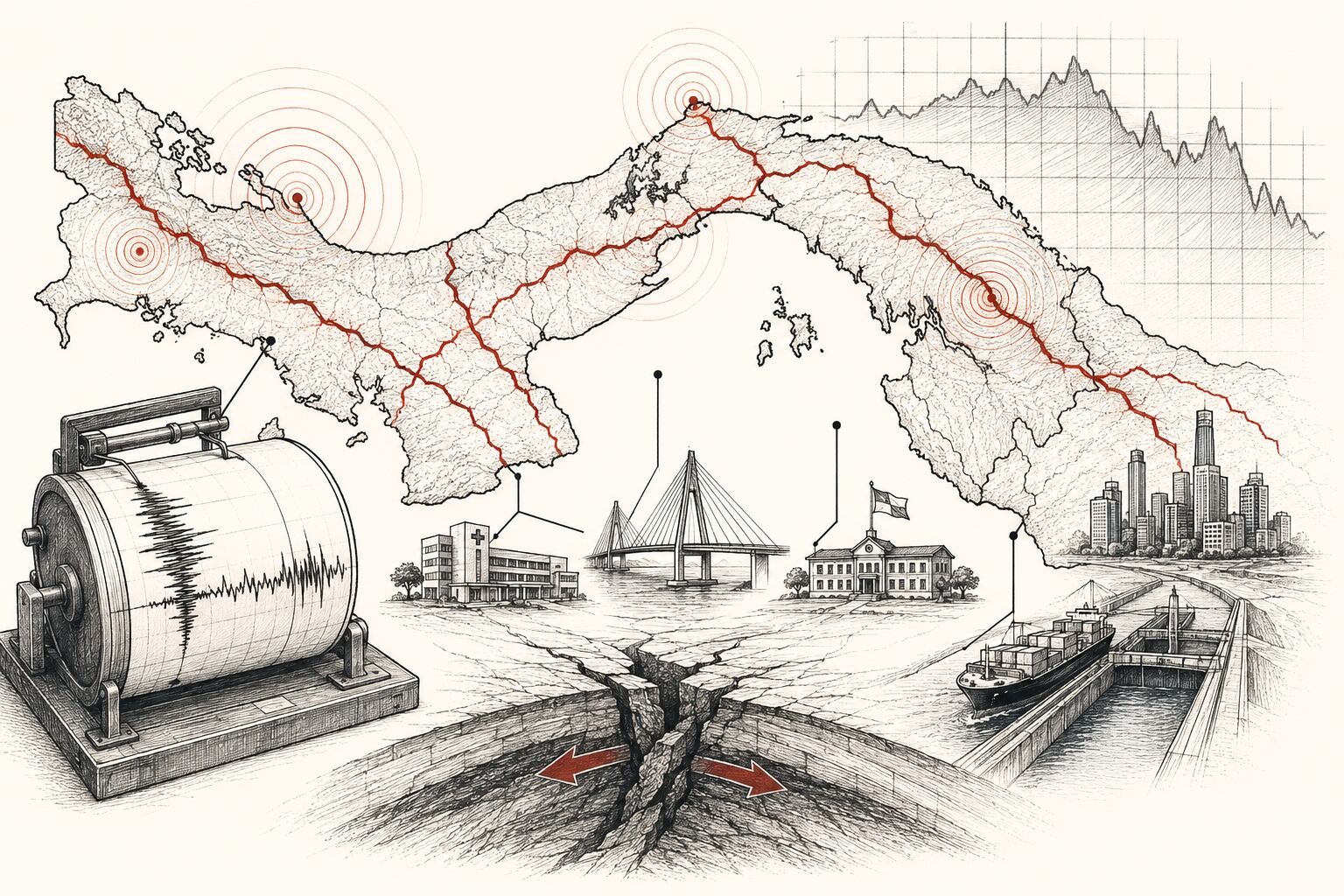
Estoy seguro de que, estimado lector, usted ha escuchado expresiones como: “Panamá, tierra bendita por Dios” o, inclusive, “Dios es panameño”, utilizadas con frecuencia para referirse a los fenómenos naturales que históricamente han afectado a nuestro país. Aunque estos modismos forman parte de nuestra cultura popular, pueden generar una sensación de seguridad y tranquilidad que no siempre se corresponde con la realidad.
Si bien es cierto que Panamá ha experimentado, en comparación con otros países, una menor incidencia de terremotos catastróficos, ello no significa que estemos exentos de esta amenaza. Por el contrario, la aparente tranquilidad podría conducir a una peligrosa complacencia respecto de la preparación y la mitigación de los efectos de un evento sísmico de magnitud considerable.
Los registros históricos demuestran que nuestro país ha sido escenario de terremotos, entre ellos los ocurridos en los años de 1621, 1882, 1913, 1934 y 2003, además de otros de magnitudes significativas. Estos antecedentes evidencian que la actividad sísmica forma parte de la dinámica geológica del territorio nacional y que sus efectos deben ser considerados con el debido rigor científico y técnico.
Estos procesos geofísicos se caracterizan por la liberación de energía producto del contacto, roce o movimiento de las placas tectónicas a lo largo de las fallas geológicas. La intensidad del movimiento del terreno depende de múltiples factores, entre ellos la magnitud, la profundidad, la distancia al epicentro y las características geológicas del subsuelo.
En materia de seguridad estructural, Panamá dispone del Reglamento Estructural Panameño (REP-2021), aprobado por la Junta Técnica de Ingeniería y Arquitectura mediante la Resolución JTIA 020-2022, de 22 de junio de 2022, publicada en la Gaceta Oficial No. 29594-A del 5 de agosto de 2022, de obligatorio cumplimiento en todo el territorio nacional. Esta revisión reglamentaria incorpora criterios modernos de diseño para la reducción de la vulnerabilidad de las edificaciones, ratificando y ampliando el criterio de desempeño, entre otros aspectos.
Asimismo, el país cuenta con la Política Nacional de Gestión Integral del Riesgo de Desastres y el Marco Nacional de Recuperación Post-Desastre 2022-2030, instrumentos que orientan las acciones de preparación, respuesta y recuperación bajo la responsabilidad del Sistema Nacional de Protección Civil, junto con el Centro de Operaciones de Emergencia y el Gabinete de Gestión Integral del Riesgo de Desastres. No obstante, la existencia de normativas de construcción y de políticas públicas no sustituye la necesidad de contar con herramientas técnicas que permitan identificar científicamente las áreas donde un terremoto podría ocasionar mayores consecuencias sobre la población, la infraestructura y los servicios esenciales.
En este contexto, resulta impostergable impulsar la elaboración de un mapa de riesgo sísmico, que no solo incorpore la amenaza sísmica como componente, sino que también integre la exposición y la vulnerabilidad de los elementos del territorio para proyectar las posibles consecuencias derivadas de las fallas geológicas. Esta herramienta permitirá identificar las zonas donde un mismo nivel de aceleración del terreno podría generar consecuencias significativamente diferentes, dependiendo de la calidad constructiva, la densidad poblacional y la capacidad de respuesta institucional. De esta manera, podríamos establecer las políticas y acciones requeridas para la disminución de los niveles de pérdidas humanas, económicas y funcionales.
Es llamativo que, pese a su importancia estratégica, Panamá aún no disponga de un mapa de riesgo sísmico, elaborado con criterios científicos e institucionalmente adoptado. Igualmente, no existe una entidad pública con un mandato específico para el desarrollo de este instrumento de manera integral y permanente.
La Sociedad Panameña de Ingenieros y Arquitectos, organismo cuyos fines incluyen servir como cuerpo consultivo del Gobierno central en materia técnica, está segura de que cuenta con profesionales idóneos, especialistas del país en todos los campos, incluyendo este tipo de actividad, capaces de liderar una iniciativa de esta naturaleza en coordinación con la academia y los centros de investigación.
En cuanto al financiamiento, el país dispone de entidades que fortalecen, apoyan y promueven el desarrollo científico y tecnológico, las cuales podrían respaldar un proyecto de esta magnitud, cuyos beneficios trascenderían ampliamente su costo y contribuirían a fortalecer la resiliencia nacional.
Panamá es un país que surge por la emersión de un arco de islas volcánicas y sirve de puente entre América del Norte y América del Sur. Esa condición exige que la planificación del desarrollo urbano y de la infraestructura se sustente en el mejor conocimiento científico posible. La tecnología necesaria para elaborar mapas modernos de riesgo sísmico existe y es utilizada desde hace años en diferentes países. Naciones vecinas como Costa Rica y Colombia ya cuentan con herramientas de este tipo para orientar sus políticas de desarrollo, protección civil y ordenamiento territorial.
Finalmente, aunque no menos importante, Panamá ha sido referente en la región por el desarrollo de su infraestructura y por su capacidad técnica. Dar el siguiente paso mediante la elaboración de un mapa de riesgo sísmico no debe verse como un desafío científico, sino como una inversión estratégica para la protección de vidas, garantizando un desarrollo más seguro para las futuras generaciones.
El autor es ingeniero civil y abogado/Expresidente de la SPIA.


© Rest of World/Getty Images
So I did a standard composer upgrade.
sudo -u www-data /usr/bin/php8.4 /usr/local/bin/composer update "drupal/*" --with-all-dependencies
and all went well.
Then I opened my browser at example.com/update.php and got a 500.
AH01071: Got error 'PHP message: PHP Warning: require_once(autoload_runtime.php): Failed to open stream: No such file or directory in /var/www/website.com/web/update.php on line 13; PHP message: PHP Fatal error: Uncaught Error: Failed opening required 'autoload_runtime.php' (include_path='.:/usr/share/php') in /var/www/website.com/web/update.php:13\nStack trace:\n#0 {main}\n thrown in /var/www/website.com/web/update.php on line 13'
So in the update.php and the index.php I had to change this bit:
// require_once 'autoload_runtime.php';
require_once __DIR__ . '/../vendor/autoload_runtime.php';
What's wrong on my system? I can't imagine this should need to be done?
It looks like Drupal 11.4 has some breaking changes for AT LEAST:
And probably more modules...be careful before updating.

Big news! We have a brand new archive page! Now you can SCROLL ENDLESSLY through the archive, or type in a comic number and read from there! I think it's very cool, and much better than the old "giant list of 6000 comics" version.
Jul 1, 16:28 UTC
Resolved - The intermittent DNS lookup failures between Managed Kubernetes and Managed Database hostnames in the FRA1 region have been resolved for now but please let us know if you see the issue again. Connectivity has remained stable, and all systems are operating normally. If you continue to experience any problems, please open a ticket with our support team. Thank you for your patience, and we apologize for any inconvenience.
Jul 1, 12:15 UTC
Update - We are continuing to investigate this issue.
Jul 1, 11:35 UTC
Investigating - As of 06:39 UTC, our Engineering team is investigating reports of intermittent DNS lookup failures for Managed Database hostnames from Managed Kubernetes, primarily affecting connections from Managed Kubernetes to Managed Database hostnames.
At this point, customers in the FRA1 region may experience intermittent connectivity issues.
We apologize for the inconvenience and will share an update once we have more information.
Jul 1, 13:28 UTC
Resolved - Our Engineering team has confirmed that the issue impacting Droplet resizes using the "Downscale Anytime" option has been fully resolved. Users can now resize their Droplets using the "Downscale Anytime" option without any issues.
We appreciate your patience while we worked to resolve this issue. If you continue to experience any problems, please open a support ticket from your account so our team can investigate further.
Jul 1, 12:43 UTC
Monitoring - Our Engineering team has identified the root cause of the issue affecting Droplet resizes using the "Downscale Anytime" option and has implemented a fix. Users should now be able to resize their Droplets using the "Downscale Anytime" option without experiencing any issues or errors.
We are actively monitoring the situation to ensure the fix remains effective and will provide another update once the issue has been fully resolved.
Jul 1, 11:13 UTC
Investigating - Our Engineering team is investigating an issue affecting Droplet resizes using the "Downscale Anytime" option. At this time users may find this option unavailable or unresponsive in the Cloud Control Panel.
As a workaround, resizes can be performed via the API while we work to resolve this issue.
We apologize for the inconvenience and will share an update once we have more information.


© iStock
Jul 2, 03:38 UTC
Resolved - This incident has been resolved, and our teams continue to monitor the results. If you experience any further issues, please contact support.
Jul 1, 08:39 UTC
Identified - Our Engineering team has identified the issue causing Agents to experience timeouts while retrieving data from Knowledge Bases.
Please be assured that our Engineering team is actively working on a fix and is treating this issue with high priority.
We sincerely apologise for any inconvenience this may have caused and appreciate your patience and understanding. If you have any further questions, please create a support ticket so that we can investigate your specific case further.
Jul 1, 06:25 UTC
Investigating - Our Engineering team is currently investigating an issue where Agents are experiencing timeouts while retrieving data from Knowledge Bases. As a result, affected Agents may fail to retrieve data and return the following error:
"Failed to retrieve data from Knowledge base(s) - timeout"
Please be assured that we are treating this as a high-priority issue and are actively working to mitigate it.
We sincerely apologise for any inconvenience this may have caused and appreciate your patience and understanding. If you have any further questions, please create a support ticket so that we can investigate your specific case further.
 | Think of AI as the new kids on the block/team you onboard every morning and offboard at the end of the day. https://www.jrockowitz.com/blog/vibing-drupal-new-kids-on-the-block [link] [comments] |
there is no videos or the chatgpt can’t tell how to download or use drupal in mac

no foolishness detected


© Rest of World/iStock